Learning Product Management by Building Hamara Sheher
What if building a startup could also be your classroom?
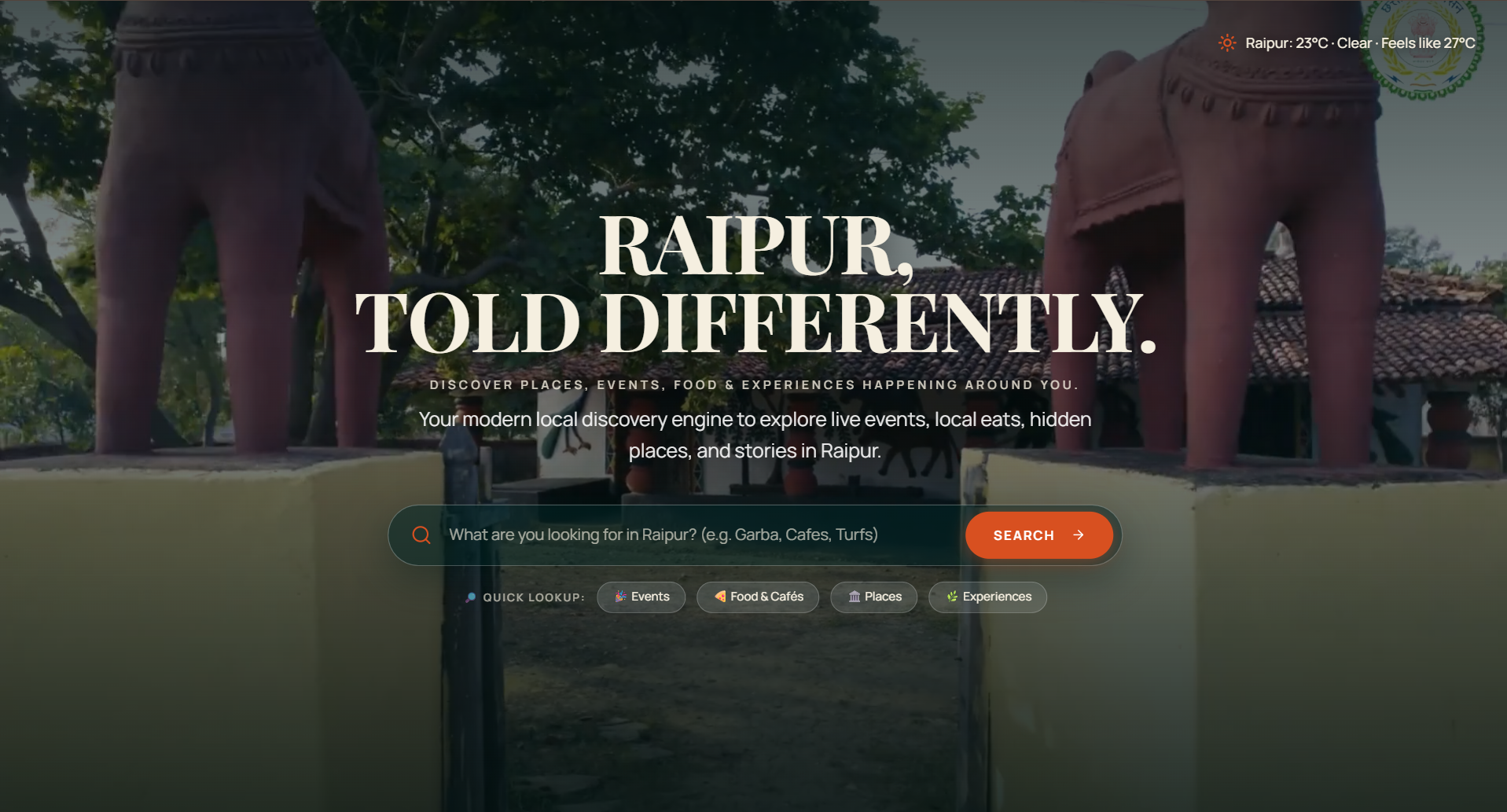
I'm taking a different approach to learning Product Management. Instead of only watching courses or reading theory, I'm applying what I learn directly to a project I'm building: Hamara Sheher, a city discovery platform starting with Raipur.
I've created a 14-day roadmap to understand how product managers identify problems, make decisions, and build products that deliver real value. Here's what the first two days have taught me.
Day 1: Learning to Think Like a Product Manager
My first lesson was about understanding the problem before jumping to a solution.
While building Hamara Sheher, it's easy to think about adding more features: event listings, restaurant recommendations, sightseeing guides, or AI-powered travel assistance. But the more important question is: What do users actually need?
I explored how product managers prioritize features, measure success, and balance user needs with business goals. I also learned about metrics such as conversion rate and contribution margin, which help connect product decisions to business outcomes.
One key takeaway was that more orders, more clicks, or more users don't automatically mean a product is successful. We need to understand the value being delivered and the costs involved.
Day 2: Understanding the User Before Building
The second day focused on product discovery, user research, and root cause analysis.
I explored a scenario where visitors come to Hamara Sheher but rarely click on event listings. Instead of immediately redesigning the website or adding an AI feature, I considered whether the content matched their intent.
Someone visiting Hamara Sheher might want to discover hidden places in Raipur, explore local eateries, or plan a weekend trip rather than book an event.
That raised an important question: Are we building around what we assume users want, or what they're actually looking for?
I learned about user journeys, Jobs to Be Done, and conversion funnels. These concepts help identify where users struggle and guide us toward the right questions to investigate.
Rather than assuming that a low click-through rate means poor design, I would investigate user behavior, validate the problem through research, and test potential improvements.
What I'm Taking Forward
These two days have changed how I'm approaching Hamara Sheher. I'm beginning to look beyond features and think more carefully about user intent, product value, and measurable outcomes.
The biggest lesson so far is simple: Don't jump straight to solutions. Understand the problem first.
I'm still learning, and I want this journal to document the actual process: the concepts I explore, the decisions I question, the mistakes I make, and the improvements I discover along the way.
Next up: Day 3 — Product Strategy, where I'll explore competitor analysis, value propositions, market sizing, and product-market fit.
One day at a time, one concept at a time.